



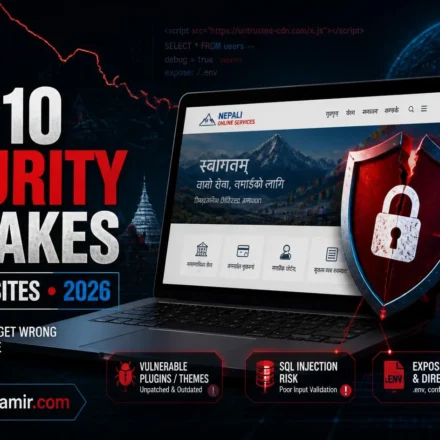
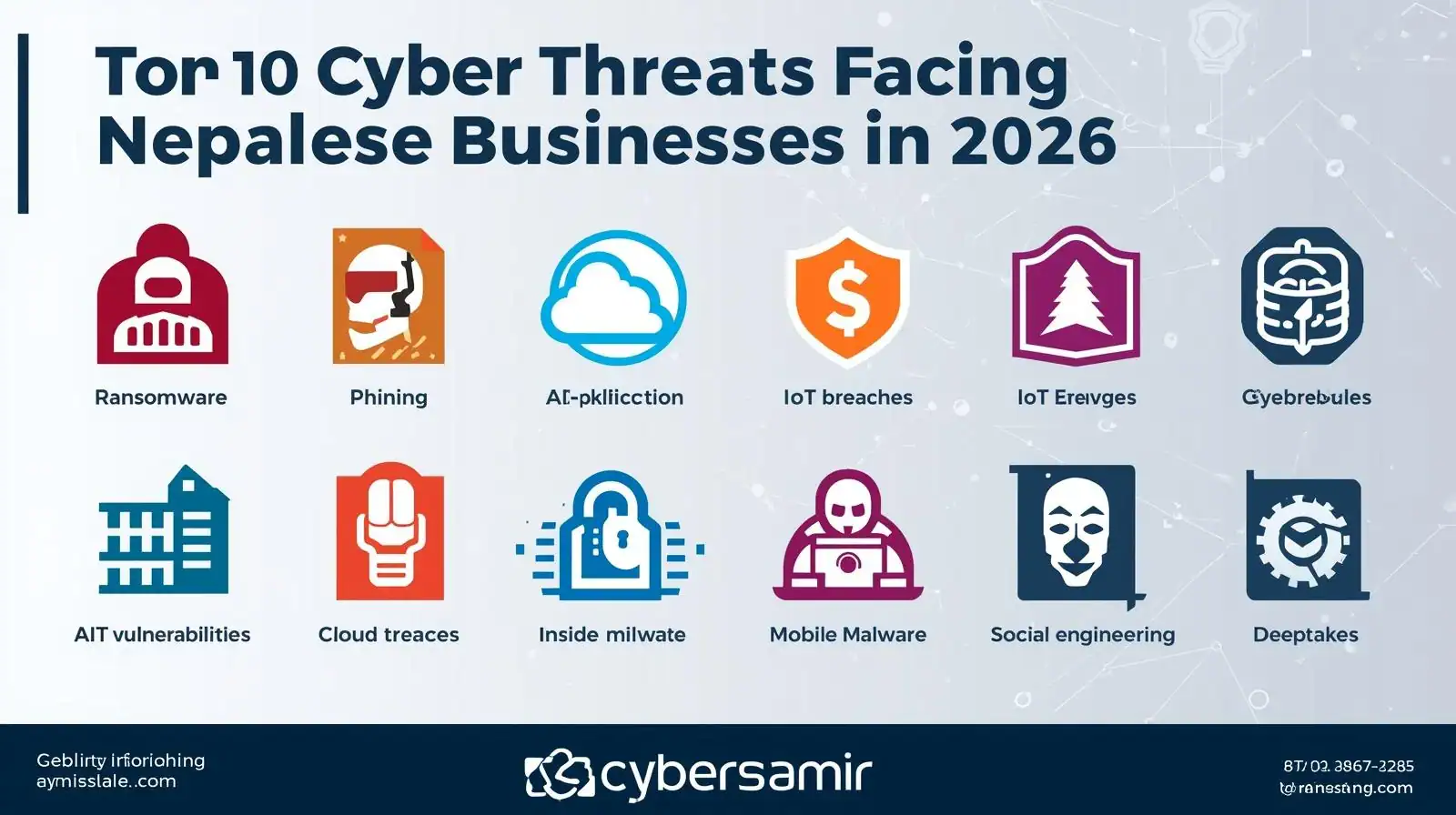

Top 10 Cyber Threats Facing Nepalese Businesses in 2026
As Nepal accelerates its digital transformation under the “Digital Nepal Framework,” the corporate risk landscape has shifted. For CEOs and IT Managers, understanding the specific cyber threats Nepal faces today is critical for survival.
Thank you for reading this post, don't forget to subscribe!What are Cyber Threats?
The Top 10 Business Cyber Risks in Nepal (2026)
01 AI-Powered Spear Phishing
Attackers now use Large Language Models (LLMs) to craft highly personalized emails in fluent Nepali or English, mimicking the exact tone of local bank managers or government officials.
02 Ransomware 3.0 (Double Extortion)
Modern ransomware doesn’t just lock your files; it steals them first. Attackers threaten to leak sensitive customer KYC data on the dark web if the ransom isn’t paid in crypto.
03 Insider Threats (Malicious & Accidental)
Disgruntled employees or negligent staff are a major business cyber risk in Nepal. This includes leaking trade secrets or accidentally clicking on malicious links.
04 Supply Chain & Third-Party Attacks
Hackers target smaller vendors or software providers that serve larger Nepalese corporations. If your accounting software or HR portal is breached, your business is next.
05 IoT Vulnerabilities in Smart Offices
Many Nepalese offices now use smart CCTV, biometric attendance, and smart bulbs. These often have default passwords and zero security updates, acting as backdoors into the corporate network.
06 Cloud Misconfigurations
As businesses migrate to AWS or DigitalOcean, lack of expertise often leads to open S3 buckets or exposed databases. In 2026, this is one of the top cybersecurity threats Nepal faces due to a shortage of cloud security experts.
07 API Exploitation
Fintech and e-commerce apps in Nepal rely on APIs to communicate. Unsecured APIs allow hackers to scrape user data or perform unauthorized transactions.
08 Distributed Denial of Service (DDoS)
Political hacktivism or business rivalry often leads to DDoS attacks, flooding a company’s website with traffic until it crashes. This is common during major sales events or sensitive political climates.
09 Deepfake Business Email Compromise (BEC)
Imagine a video call from your “CEO” (who is actually an AI deepfake) asking you to urgently transfer 5 million NPR to a new vendor. In 2026, this is a terrifying reality for Nepalese finance teams.
10 Unpatched Legacy Software
Many businesses still use “Cracked” versions of Windows or old CMS frameworks (like Joomla or older WordPress). These are easy prey for automated botnets scanning for vulnerabilities.
Final Expert Advice
The top cybersecurity threats Nepal faces in 2026 are no longer just “technical glitches”—they are business-ending events. For Nepalese SMEs and Large Enterprises, the focus must shift from “if we get hacked” to “when we get hacked.”
Start Your Defense Today:
- Schedule a Professional Vulnerability Assessment (VAPT).
- Enable MFA (Multi-Factor Authentication) on every single corporate account.
- Train your staff; they are your first line of defense.
- How to Start Ethical Hacking in Nepal – Free Beginner Guide 2026
- Cybersecurity in Nepal (2026): Threats, Laws, Attacks & Statistics
- Nepal Police Cyber Bureau official resources: https://cyberbureau.police.gov.np/ (or latest CERT-Nepal page)
FAQ SECTION