





Vulnerability management in 2026 is a race against time and AI-powered adversaries. Whether you choose the cloud-native brilliance of Wiz, the enterprise reliability of Tenable, or the developer-centric speed of Snyk, the goal remains the same: reduce the window of exposure before an attacker can find the door. Stay updated, stay integrated, and always assume your attack surface is larger than you think. In this landscape, understanding the role of vulnerability scanners 2026 is crucial for maintaining security.
Thank you for reading this post, don't forget to subscribe!The Comprehensive Guide to Vulnerability Scanners in 2026: Top 10 Picks
As we navigate through 2026, the concept of a “vulnerability” has radically shifted. We are no longer just looking for missing patches on a Windows server. Today’s attack surface encompasses fragmented microservices, AI model weights, ephemeral cloud functions, and a global supply chain of open-source dependencies. Static, scheduled scans are a relic of the past; in their place stands Continuous Threat Exposure Management (CTEM).
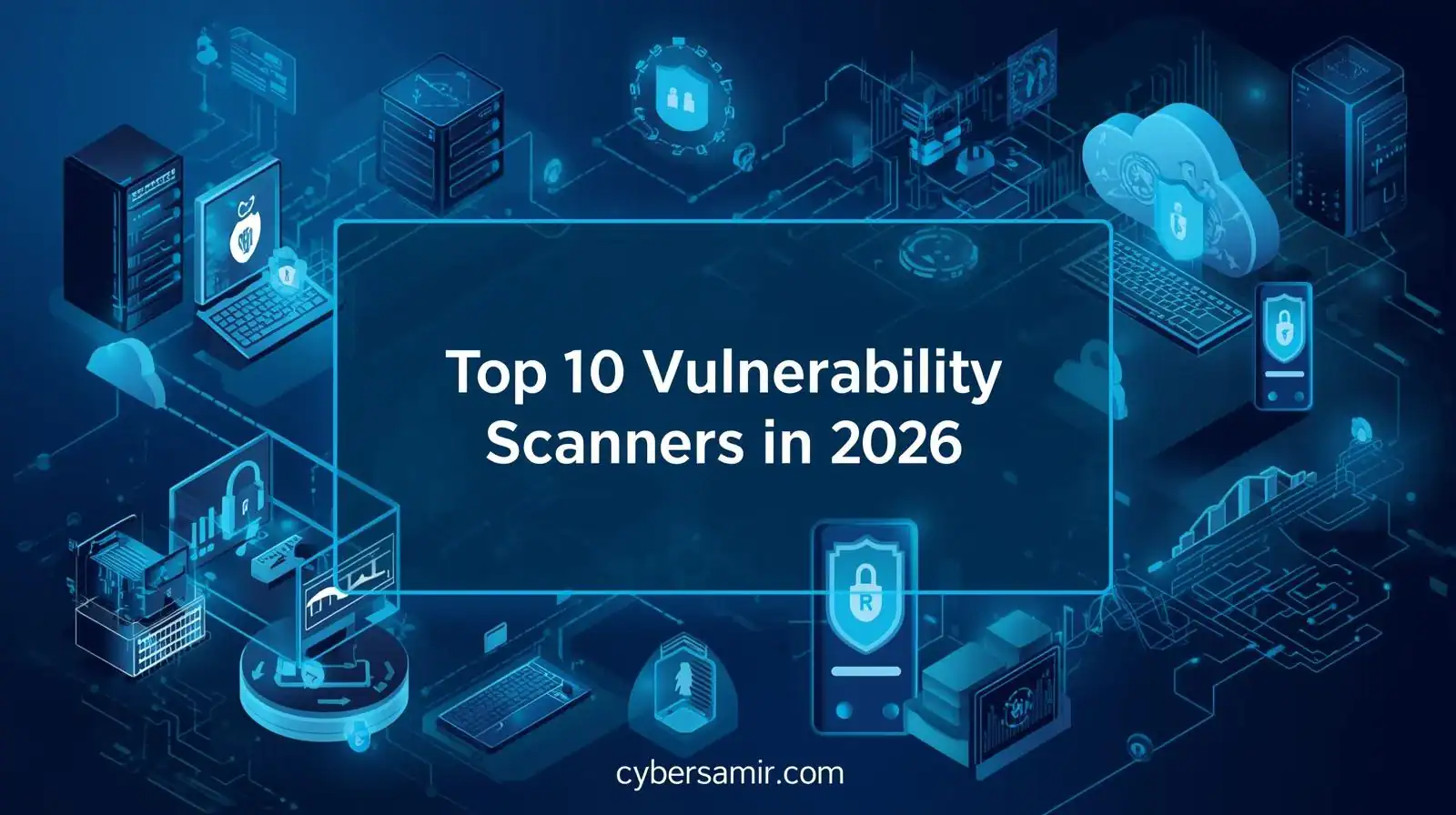
In this high-stakes environment, a vulnerability scanner is your primary reconnaissance tool. However, the market has split into specialized niches. Some tools excel at “Shift Left” (securing code before it’s deployed), while others focus on “Shield Right” (monitoring live cloud environments). This guide provides an exhaustive deep dive into the 10 most critical scanners you must know to protect your infrastructure this year.
I. The Evolution of Vulnerability Management
By 2026, the average enterprise manages 10x more assets than it did five years ago. This explosion is driven by IoT, edge computing, and the proliferation of containerized apps. Attackers now use Generative AI (GenAI) to write custom exploits for zero-day vulnerabilities within hours of disclosure. According to the 2025 Global Security Report, the average time between vulnerability disclosure and an active exploit attempt has dropped to just 4.2 hours.
To counter this, scanners have integrated Agentic AI—autonomous agents that don’t just find a bug, but also attempt to safely “exploit” it in a sandbox to prove reachability and then suggest a localized code fix. Modern scanners now provide Attack Path Analysis, allowing security teams to visualize the blast radius of a single misconfiguration.
II. Top 10 Vulnerability Scanners of 2026
01. Tenable Nessus (Tenable One)
Tenable has successfully transitioned from being “just a scanner” to an Exposure Management Platform. Nessus remains the most widely deployed scanner globally, boasting over 200,000 plugins. In 2026, its standout feature is ExposureAI, which allows for natural language queries.
- Core Strength: Massive vulnerability database and unparalleled depth in legacy OT/IoT environments.
- 2026 Innovation: “Contextual Asset Discovery” which identifies assets based on behavioral patterns rather than just IP addresses.
- Best For: Large enterprises with complex hybrid-cloud and on-premise infrastructure.
02. Wiz (Cloud-Native Leader)
Wiz continues to dominate the cloud-native space. Their agentless side-scanning technology has become the industry standard for AWS, Azure, and GCP. By 2026, Wiz has expanded into AI Security Posture Management (AI-SPPM), focusing on the security of AI training pipelines.
- Core Strength: The “Wiz Graph,” which visualizes risk connections across identities, data, and vulnerabilities.
- 2026 Innovation: Automated scanning for Large Language Model (LLM) “poisoning” vulnerabilities.
- Best For: Companies born in the cloud or moving aggressively to serverless and Kubernetes.
03. Qualys VMDR 2.0
Qualys remains the most robust “all-in-one” SaaS platform. Their TruRisk™ scoring system is highly valued by CISOs because it translates technical CVE scores into business risk scores. In 2026, Qualys has integrated Zero-Touch Patching directly into the scanner engine.
- Core Strength: Unified platform that combines asset discovery, vulnerability assessment, and immediate remediation.
- 2026 Innovation: Real-time MTTR (Mean Time To Remediation) benchmarks compared against global peers.
- Best For: Organizations that want to consolidate their security stack into a single vendor.
04. Snyk (Developer-First)
Snyk changed the game by making security a “developer” problem. In 2026, Snyk is the undisputed leader in Software Composition Analysis (SCA) and Static Analysis (SAST). It lives directly inside the developer’s IDE (Visual Studio Code, IntelliJ).
- Core Strength: Integrated fixes. It doesn’t just identify a bug; it provides a one-click Pull Request to fix it.
- 2026 Innovation: “DeepCode AI Fix,” which uses machine learning to rewrite vulnerable logic rather than just updating libraries.
- Best For: Fast-moving DevOps teams and high-growth tech companies.
05. Rapid7 InsightVM
Rapid7 is best known for its deep integration with Metasploit. This makes it a favorite for Red Teams. In 2026, its Attack Prediction Engine uses global threat intelligence to tell you which vulnerability is likely to be exploited *next* based on current underground market trends.
- Core Strength: Contextual prioritization and seamless handoff to incident response teams.
- Best For: Mature security teams that run active internal penetration tests.
06. Invicti (Modern DAST)
Web applications and APIs are the #1 attack vector in 2026. Invicti specialized in Dynamic Application Security Testing (DAST). Their “Proof-Based Scanning” is revolutionary, providing a 99.9% accuracy rate.
07. CrowdStrike Falcon Exposure Management
CrowdStrike has disrupted the market by utilizing their existing endpoint agent. In 2026, they have focused heavily on Identity-based vulnerabilities, recognizing that compromised credentials are often the “vulnerability” that matters most.
- Core Strength: No additional scanning overhead. The data is collected in real-time as the computer is used.
- Best For: Existing CrowdStrike customers looking to eliminate “scanning windows.”
08. OpenVAS (Greenbone)
For those who prefer open-source or have strict data residency requirements, OpenVAS remains the premier choice. In 2026, the Greenbone Enterprise feed provides over 150,000 vulnerability tests, often updated faster than commercial rivals.
- Core Strength: Transparency and customizability. You can write your own NASL (Nessus Attack Scripting Language) scripts.
- Best For: Government agencies, non-profits, and budget-conscious tech startups.
09. ZeroThreat (AI-Native Scanning)
ZeroThreat is the newest entrant on this list. Built from the ground up in the 2020s, it ignores legacy network scanning to focus entirely on APIs and Microservices using autonomous AI agents.
- Core Strength: Discovery of “Shadow APIs”—endpoints created by developers that aren’t documented but are open to the internet.
- Best For: FinTech and SaaS companies with heavy API usage.
10. Nuclei (The Bug Bounty Standard)
Nuclei has become the favorite tool of the global bug bounty community. It is a template-based scanner. In 2026, it is used by SecOps teams for rapid response to zero-day events (e.g., Log4j-style events).
- Core Strength: Blistering speed. It can scan an entire sub-domain range for a specific bug in seconds.
- Best For: Rapid zero-day response and external attack surface management.
III. Comparative Analysis Table
| Tool Name | Core Focus | Scanning Method | AI Maturity | Pricing Tier |
|---|---|---|---|---|
| Tenable One | Full Infrastructure | Hybrid / Agent | Advanced | Enterprise |
| Wiz | Cloud / Kubernetes | Agentless | High | Enterprise |
| Snyk | Code / Apps | IDE Integrated | Very High | Freemium |
| Invicti | Web / APIs | DAST (Dynamic) | Medium | Professional |
| Nuclei | Zero-Day/Attack Surface | Template-Based | N/A | Open Source |
IV. Key Selection Criteria for 2026
Choosing a scanner is no longer about who has the longest list of CVEs. In 2026, use the following “Golden Triad” for evaluation:
- Reachability Analysis: Does the tool know if the bug is actually exploitable from the internet? (This can reduce your alert volume by 60%).
- Asset Inventory Precision: Can it find resources in “unlinked” cloud accounts or forgotten Docker registries?
- Ecosystem Integration: Does it plug natively into your Slack, Jira, and GitHub?
V. The Future: Towards “Self-Healing” Infrastructure
As we look toward 2027, the line between “Scanning” and “Patching” is blurring. Leading companies are now experimenting with Autonomous Remediation. In this model, the scanner finds a bug, an AI agent writes a patch, a separate AI tests the patch in a staging environment to ensure nothing breaks, and finally, the patch is deployed to production—all without a human clicking a single button.
While we aren’t fully there yet, the tools on this list are the foundation of that future. By choosing a scanner that prioritizes context and integration, you are building a resilient, adaptive digital fortress for your organization.
Conclusion
Vulnerability management in 2026 is a race against time and AI-powered adversaries. Whether you choose the cloud-native brilliance of Wiz, the enterprise reliability of Tenable, or the developer-centric speed of Snyk, the goal remains the same: reduce the window of exposure before an attacker can find the door. Stay updated, stay integrated, and always assume your attack surface is larger than you think.