





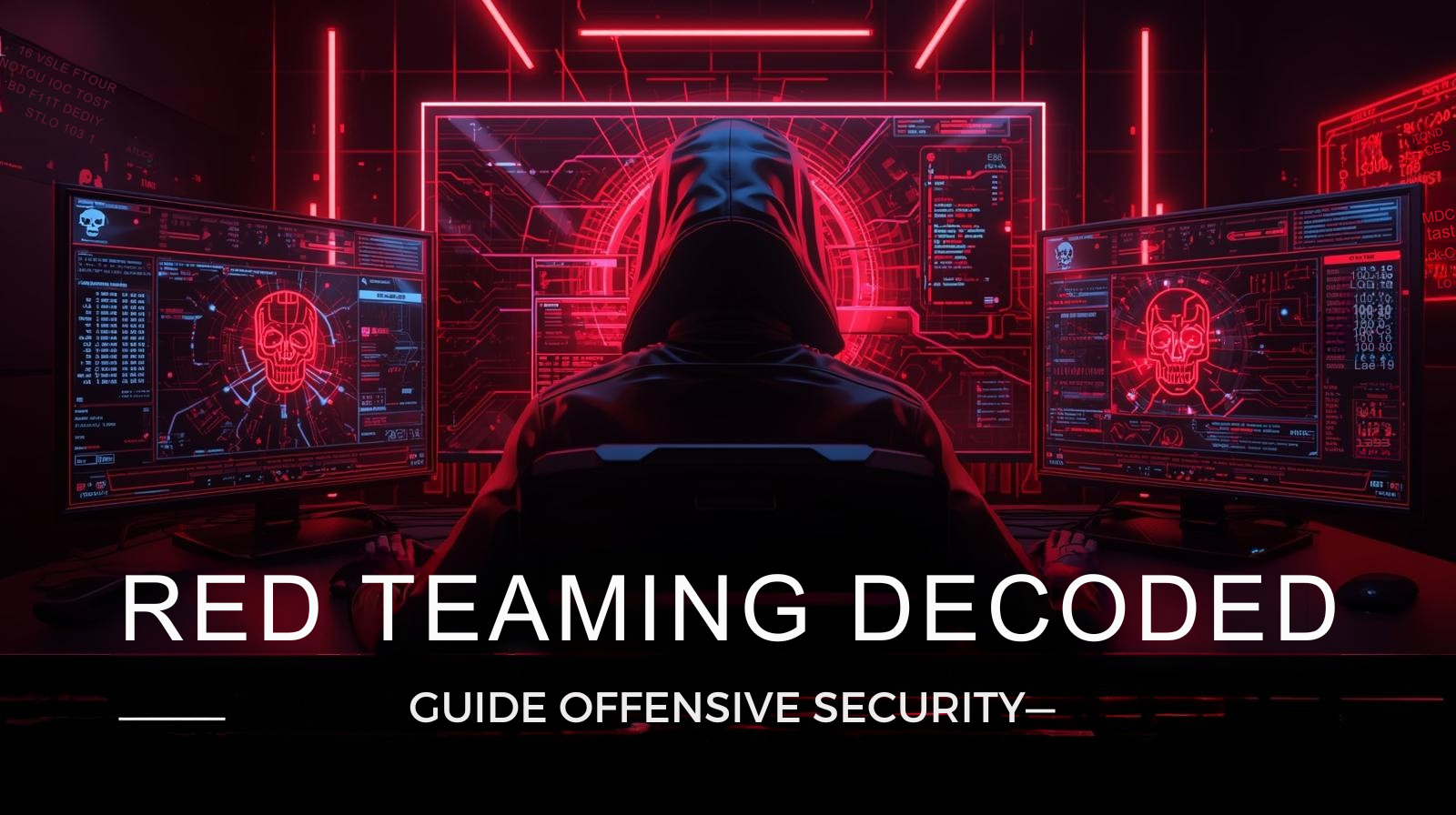

Red Teaming Decoded: The Ultimate Guide to Starting Your Offensive Security Career
In the world of cybersecurity, “defense in depth” is the standard. Companies spend millions on firewalls, EDRs (Endpoint Detection and Response), and SOC teams. But how do they know if any of it actually works against a motivated human adversary?
Thank you for reading this post, don't forget to subscribe!Enter Red Teaming.
If you have ever wanted to simulate real-world cyberattacks not just to find bugs, but to test an organization’s ability to survive a breach this guide is for you. Today, we are breaking down what Red Teaming is, how it differs from penetration testing, and providing a complete roadmap on how you can start your career in this elite field.
What is Red Teaming?
Red Teaming is a full-scope, multi-layered attack simulation designed to measure how well a company’s people, networks, applications, and physical security controls can withstand an attack from a real-life adversary.
Unlike standard vulnerability scanning, a Red Team does not just look for open ports or outdated software. They have a specific objective, such as:
- “Exfiltrate the customer database without being detected.”
- “Gain access to the CEO’s email account.”
- “Plant a physical device in the server room.”
The goal is not just to break in; it is to challenge the Blue Team (the defenders) and see if they can catch you.
Red Teaming vs. Penetration Testing: The Critical Difference
Many beginners confuse these two terms. Here is the distinction:

| Feature | Penetration Testing (Pentesting) | Red Teaming |
| Goal | Find as many vulnerabilities as possible. | Test the organization’s detection & response. |
| Scope | Narrow (e.g., “Test this one web app”). | Broad (e.g., “The entire company”). |
| Technique | Often “noisy” and obvious. | Stealthy and evasive. |
| Duration | Short (1-2 weeks). | Long (Weeks or Months). |
| Awareness | The Blue Team usually knows it’s happening. | The Blue Team is often unaware (blind test). |
Pro Tip: Think of a Pentest as a safety inspection of your house’s locks. Think of a Red Team engagement as hiring a professional thief to see if they can break in while you are sleeping without waking the dog.
The Red Team Lifecycle
A professional Red Team operation follows a structured lifecycle, often based on frameworks like MITRE ATT&CK or the Cyber Kill Chain:
- Reconnaissance: Gathering Open Source Intelligence (OSINT) on employees and technology.
- Weaponization: Creating custom malware or phishing payloads.
- Delivery: Sending the phishing email or dropping a USB drive.
- Exploitation: Gaining the initial foothold on a computer.
- Installation: Establishing persistence (making sure you can get back in).
- Command & Control (C2): Communicating with the compromised machine remotely.
- Actions on Objectives: Stealing the data or completing the mission.
How to Start: A Roadmap for Aspiring Red Teamers
Red Teaming is not an entry-level role. It requires a deep understanding of how systems work to break them. Here is your roadmap to building that foundation.
Phase 1: The Foundations (Don’t Skip This!)
You cannot hack what you do not understand.
- Networking: Master TCP/IP, DNS, HTTP, and how firewalls analyze traffic.
- Operating Systems: You need deep knowledge of Windows (Active Directory, Registry, Services) and Linux (Kernel, file permissions).
- Coding: You don’t need to be a developer, but you must read and modify code. Focus on:
- Python: For automation and scripting tools.
- PowerShell/Bash: For living-off-the-land (using built-in system tools).
- C/C++ or Go: For writing custom malware that bypasses antivirus.
Phase 2: Master the Tools & Tactics
While tools don’t make the hacker, you need to know the industry standards:
- Cobalt Strike: The gold standard for Command and Control (C2).
- Metasploit: For exploitation framework fundamentals.
- BloodHound: Essential for mapping Active Directory attack paths.
- Burp Suite: For web application attacks.
- Nmap: For network discovery.
Phase 3: Active Directory (The Keys to the Kingdom)
95% of Fortune 500 companies use Microsoft Active Directory (AD). If you want to be a Red Teamer, you must understand AD exploitation. Learn about:
- Kerberoasting
- Pass-the-Hash / Pass-the-Ticket
- Golden/Silver Tickets
- Group Policy Object (GPO) abuse
Phase 4: Certifications
Certifications validate your skills and help you get past HR filters.
- Entry Level:
- eJPT (eLearnSecurity Junior Penetration Tester): Great hands-on start.
- Security+: Good for theory and terminology.
- Professional Level:
- OSCP (Offensive Security Certified Professional): The legendary 24-hour exam. It is technically a pentesting cert, but it is the gatekeeper for most Red Team jobs.
- PNPT (Practical Network Penetration Tester): A modern, highly practical alternative to OSCP.
- Advanced Red Teaming:
- CRTO (Certified Red Team Operator): Focuses specifically on Cobalt Strike and avoiding detection.
- CRTP (Certified Red Team Professional): The best certification for Active Directory attacks.
How to Practice (Legally)
You need a lab. You cannot learn this just by reading.
- Build a Home Lab: Set up a Windows Server domain controller and a few Windows 10 clients in VirtualBox or VMware. Try to hack your own network.
- HackTheBox (HTB): Look for the “Pro Labs” like Dante or RastaLabs which simulate corporate networks.
- TryHackMe: Their “Red Teaming” learning path is excellent for beginners.
Conclusion: Is Red Teaming for You?
Red Teaming is challenging. It requires patience, creativity, and a constant drive to learn. You will fail often your payloads will get caught by antivirus, your phishing emails will be blocked, and you will hit dead ends.
But when you finally bypass that firewall, escalate your privileges to Domain Admin, and complete your objective there is no better feeling in the world.
Ready to take the next step?
At CyberSamir, we are dedicated to building the next generation of cybersecurity professionals in Nepal and beyond. Whether you need professional penetration testing services for your business or training to launch your career, we are here to help.